
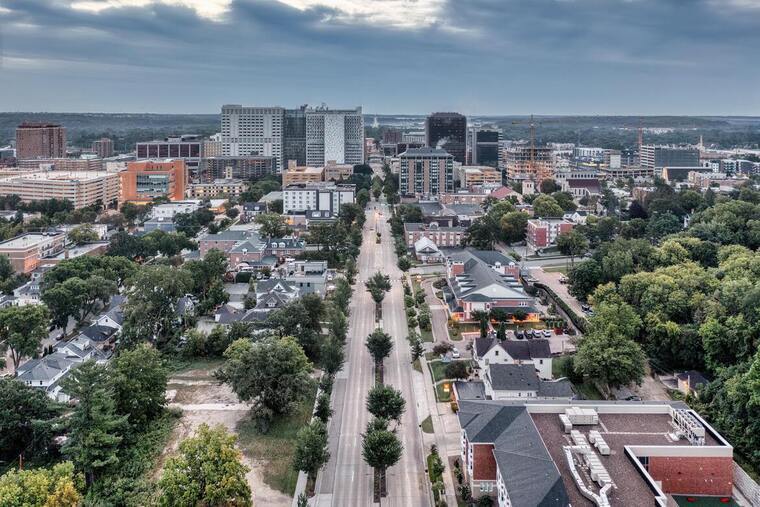
Falling Debris at Historic Saloon Site Injures Pedestrian
Vacant Buildings, Liability Exposure, and the Importance of Proactive Risk Management
A recent incident in downtown El Paso, Texas serves as an important reminder that property exposures do not disappear simply because a building is vacant. When debris from a deteriorating historic structure detached and injured a pedestrian, local officials responded by restricting access to the area and identifying conditions that posed a potential threat to public safety.
Reports indicate that portions of the building's cornice separated from the structure due to deterioration of underlying structural connections. While the reported injuries were relatively minor, the outcome could have been significantly more severe.
Across the country, many historic and aging buildings face deferred maintenance challenges. As structures age, deterioration of roofs, façades, cornices, masonry, balconies, signage, and other exterior components can create serious safety concerns for pedestrians, tenants, visitors, and neighboring properties. Even a seemingly minor defect can result in significant bodily injury, property damage, litigation, and financial loss.
For property owners and investors, this incident underscores the importance of combining proactive property maintenance, routine inspections, and appropriate insurance protection as part of a comprehensive risk management strategy.
Vacant Buildings Still Present Significant Liability Exposure
Many property owners mistakenly assume that liability exposure decreases substantially when a property is unoccupied. While occupancy-related exposures may decline, vacant properties continue to present numerous risks.
Exterior building components can fail without warning. Unauthorized access, vandalism, weather-related damage, deteriorating structural elements, and neglected maintenance conditions can all create hazards that impact third parties.
In the El Paso incident, the exposure originated from the building exterior rather than activities occurring inside the premises. This serves as an important reminder that liability risks often extend beyond property boundaries and can affect pedestrians, neighboring businesses, contractors, visitors, and the general public.
Claims involving bodily injury can result in:
- Medical expenses
- Legal defense costs
- Settlements
- Court-awarded judgments
- Investigation expenses
- Reputational damage
- Lost business opportunities
For these reasons, Commercial General Liability (CGL) Insurance remains a foundational component of a property owner's insurance program. CGL coverage is generally designed to respond to covered third-party bodily injury and property damage claims, subject to policy terms, conditions, limitations, exclusions, and endorsements.
However, insurance should never be viewed as a substitute for property maintenance, inspection programs, or prudent ownership practices. Property owners remain responsible for identifying hazards, maintaining safe premises, and addressing known defects in a timely manner.
Severe Liability Claims Continue to Become More Expensive
Property owners should recognize that the financial consequences of liability claims have increased dramatically in recent years.
According to industry reporting, general liability claim severity has risen substantially, driven largely by higher medical costs, increased litigation expenses, rising jury awards, and expanding settlement values.
While fatalities remain relatively uncommon, incidents involving falling debris, structural failures, roof components, façade elements, or other building-related hazards can produce catastrophic injuries and significant legal exposure.
Even non-fatal injuries may generate substantial claims that exceed expectations.
As a result, many property owners should carefully evaluate whether their current liability limits remain adequate in today's increasingly litigious environment.
Matching Insurance Coverage to the Exposure
A comprehensive insurance program should reflect the specific exposures associated with a property's age, condition, occupancy status, location, and operational use.
In addition to Commercial General Liability Insurance, many property owners should consider evaluating:
Commercial Umbrella and Excess Liability Insurance
A serious injury involving multiple claimants, catastrophic bodily injury, or significant litigation can rapidly exhaust primary liability limits.
Commercial Umbrella or Excess Liability Insurance may provide additional layers of protection above underlying liability policies, subject to policy requirements and coverage structure.
Large verdicts, nuclear verdict trends, and increasing legal costs continue to make excess liability protection an important consideration for many property owners and real estate investors.
Commercial Property Insurance
While liability policies address certain third-party claims, they generally do not insure the owner's building against direct physical loss or damage.
Commercial Property Insurance may help address covered losses involving perils such as:
- Fire
- Windstorm
- Hail
- Certain vandalism losses
- Other covered causes of loss
Property owners should be aware that deterioration, deferred maintenance, wear and tear, corrosion, and certain other maintenance-related conditions are typically excluded or otherwise limited under many property insurance policies.
Understanding what a policy covers is just as important as understanding what it does not cover.
Ordinance and Law Coverage
Older and historic structures can create unique rebuilding challenges.
Following a covered loss, property owners may be required to bring damaged portions of a structure into compliance with current building codes, accessibility requirements, safety standards, or local ordinances.
These additional costs can be substantial and may not be fully covered without appropriate Ordinance and Law Coverage endorsements.
This is a frequently overlooked coverage consideration, particularly for aging and historic buildings.
Vacant Property Considerations
Vacant properties often require specialized underwriting review and may be subject to occupancy requirements, vacancy provisions, inspection requirements, or policy restrictions.
Property owners should communicate material changes in occupancy, operations, renovations, tenant activity, or building condition to their insurance advisor and insurance carrier when appropriate.
Failure to accurately disclose occupancy status or material changes in risk may impact underwriting eligibility or claim outcomes.
Preventive Maintenance Remains One of the Most Effective Risk Management Tools
As repair costs, labor expenses, and construction material pricing continue to rise, it may be tempting to delay maintenance projects.
However, deferred maintenance can significantly increase both loss frequency and loss severity.
Property owners should consider implementing a documented inspection and maintenance program that includes:
- Routine exterior building inspections
- Roof inspections
- Façade and masonry evaluations
- Drainage assessments
- Sidewalk and parking lot reviews
- Hazard identification procedures
- Lighting and security reviews
- Inspection of balconies, railings, signage, and attached structures
- Monitoring for unauthorized occupancy or trespassing
- Prompt repair of identified hazards
For vacant properties, periodic documented inspections are particularly important. Depending upon the property's size, condition, location, and exposure profile, many risk management professionals recommend inspections at regular intervals and after significant weather events.
When concerns are identified, owners should engage qualified contractors, engineers, architects, or building specialists to evaluate conditions and recommend corrective action.
Maintaining documentation of inspections, maintenance activities, contractor reports, repairs, and corrective actions may also prove valuable in demonstrating responsible ownership and risk management efforts.
Risk Management is a Shared Responsibility
At Republic Insurance Group, LLC, we believe that effective risk management is most successful when it operates as a partnership between the property owner, management team, insurance professionals, carriers, and other qualified advisors.
Insurance is only one component of a broader risk management strategy.
Property owners and insureds play a critical role by:
- Maintaining accurate property valuations
- Conducting routine inspections
- Addressing maintenance concerns promptly
- Reporting claims and incidents in a timely manner
- Communicating material operational changes
- Reviewing insurance programs annually
- Evaluating liability limit adequacy
- Maintaining appropriate contracts and risk transfer provisions
- Implementing reasonable safety and security measures
- Consulting qualified legal, engineering, accounting, and risk management professionals as appropriate
The quality and accuracy of information provided by an insured directly impacts underwriting evaluations, policy structure, coverage recommendations, property valuation adequacy, and overall risk management outcomes.
A well-maintained property combined with a thoughtfully structured insurance program can help reduce the likelihood of unexpected financial consequences and better position an organization to respond when losses occur.
Partner with Republic Insurance Group, LLC
At Republic Insurance Group, LLC, we understand the unique risk management challenges facing commercial real estate owners, property managers, hospitality operators, conference centers, destination resorts, luxury resorts, mixed-use developments, historic properties, and investment real estate portfolios.
We take a collaborative, partnership-oriented approach to client relationships, helping organizations evaluate exposures, identify potential coverage gaps, and develop insurance and risk management strategies aligned with their operational goals, financial objectives, and long-term asset preservation efforts.
Our team works closely with clients, insurance carriers, underwriting specialists, loss control professionals, and risk management resources to assist with evaluating:
- Commercial Property Insurance
- Commercial General Liability Insurance
- Commercial Umbrella and Excess Liability Insurance
- Cyber Liability Insurance
- Employment Practices Liability Insurance
- Commercial Automobile Insurance
- Builders Risk Insurance
- Contractual Risk Transfer Strategies
- Loss Control and Safety Programs
- Property Valuation Reviews
- Hospitality and Guest Safety Exposures
- Vacant Property and Historic Property Risks
- Business Continuity and Disaster Recovery Planning
We welcome the opportunity to learn more about your organization and discuss how insurance, risk management, operational controls, and proactive property stewardship can help support your long-term business objectives.
Important Disclaimer
This article is provided solely for general educational and informational purposes and should not be construed as legal, insurance, tax, accounting, engineering, risk management, underwriting, regulatory, compliance, safety, governance, environmental, accessibility, or other professional advice.
Republic Insurance Group, LLC does not provide legal advice or engineering services. Property owners, investors, operators, management companies, boards, and insureds should consult qualified legal counsel, engineers, architects, contractors, accountants, valuation specialists, and other professional advisors regarding their specific circumstances.
Discussion of liability exposures, maintenance practices, insurance coverages, claims scenarios, risk management techniques, or loss prevention strategies is provided solely for educational purposes and may not apply to every property, organization, or situation.
Insurance coverage is subject to the actual terms, conditions, definitions, limitations, exclusions, endorsements, sublimits, waiting periods, underwriting requirements, and policy provisions contained within each individual insurance contract. Coverage applicability can only be determined by reviewing the specific policy language and the facts and circumstances of a particular claim.
Examples discussed herein are illustrative in nature and should not be interpreted as guarantees of coverage, claim payment, underwriting acceptance, risk reduction, litigation outcomes, regulatory compliance, insurance availability, or financial performance.
Property owners, investors, operators, management companies, and insureds remain solely responsible for maintaining their properties, conducting appropriate inspections, complying with applicable laws and regulations, maintaining accurate property valuations, disclosing material changes in risk, implementing reasonable safety procedures, reviewing contracts, maintaining adequate insurance, and obtaining professional advice appropriate to their specific circumstances.
Republic Insurance Group, LLC
Protecting Real Estate Assets. Strengthening Risk Management. Supporting Safe and Sustainable Operations.
Additional Insurance Disclosure
The information contained herein is provided as a general discussion of insurance and risk management topics and is intended solely for educational purposes. It is not intended to provide legal, tax, accounting, engineering, valuation, regulatory, compliance, or insurance advice for any specific individual, organization, property, or transaction.
Descriptions of insurance coverages are necessarily general in nature and do not include all policy provisions, limitations, exclusions, endorsements, conditions, definitions, or underwriting requirements. Actual coverage must be determined solely by reviewing the applicable insurance policy and evaluating the specific facts and circumstances involved.
Policyholders should review all insurance policies, limits, deductibles, endorsements, and property values regularly and work with qualified insurance professionals and other advisors to ensure their insurance program remains aligned with their evolving operational and risk management needs.